The Addo Elephant National Park was proclaimed in 1931 to protect just 11 elephant. The great herds of elephant and other species had been decimated by hunters over the 1700s and 1800s. In the late 1800s, farmers began to colonize the area around the park, also taking their toll on elephant population due to competition for water and crops. This conflict reached a head in 1919 when farmers called on the government to exterminate the elephants. Major Pretorius was appointed to shoot the remaining elephants – he killed 114 elephant between 1919 and 1920.
Public opinion then changed, leading to the proclamation of the park in 1931. The original park was just over 2 000 hectares. Conflicts between elephants and farmers continued after proclamation as no adequate fence enclosed the park. Finally in 1954, Graham Armstrong (park manager) developed an elephant-proof fence constructed using tram rails and lift cables, still used today, and an area of 2 270 hectares was fenced in. There were 22 elephant at the time. Although the park was originally to protect a single species, it now conserves the rich biological diversity found in the area.
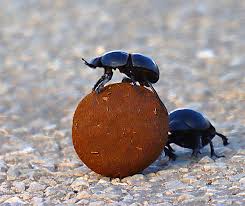
Today the Greater Addo National Park covers 180,000 hectares of land and has over 550 elephants as well as the Big 5. There is also the flightless dung beetle, found almost exclusively in Addo! Further, there is a 120,000 hectare marine protected area (MPA). The park stretches from Darlington Dam in the Karoo in the north, across to the Zuurberg Mountains in the south, through the game viewing area and down to the coast at the Sundays River Mouth. From here, it stretches along the coast through the Alexandria Dune Fields and Woody Cape to Cannon Rocks with another small section near the Bushmans River Mouth. You can self drive through the park for the day or, stay overnight at the park’s rest camps. Alternately, book separately for a luxury private lodge or private glamping within the park. While in the park, you can join a Whats App Group for sightings.
All take place from the main rest camp with rangers on the camp’s 4×4 safari vehicle. You can choose from Sunrise, Sunset, Day or Night Drives.
Birding:
There are excellent habitat contrasts between dense thickets of spekboom interspersed with open grassy areas and wooded kloofs (particularly in the Zuurberg region). 418 species have been found.
Sasol Red Bishop Hide– Overlooks a small wetland area.
Spekboom Hide– with pristine Albany thicket vegetation so visitors can experience the bush first-hand and spot some of the smaller creatures and birds that frequent this habitat. You can also arrange to spend a night here at the waterhole.
Hiking Trails:
There are a number of different hiking options incl. exploring the Woody Cape. They range from a few hours to overnight.
Accommodation
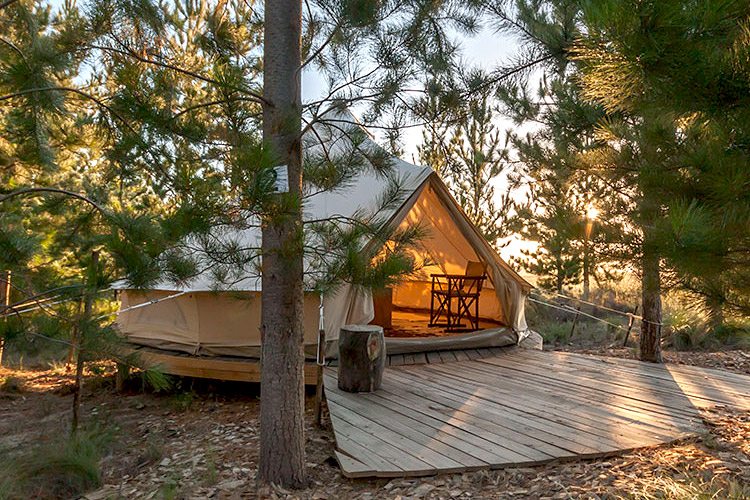
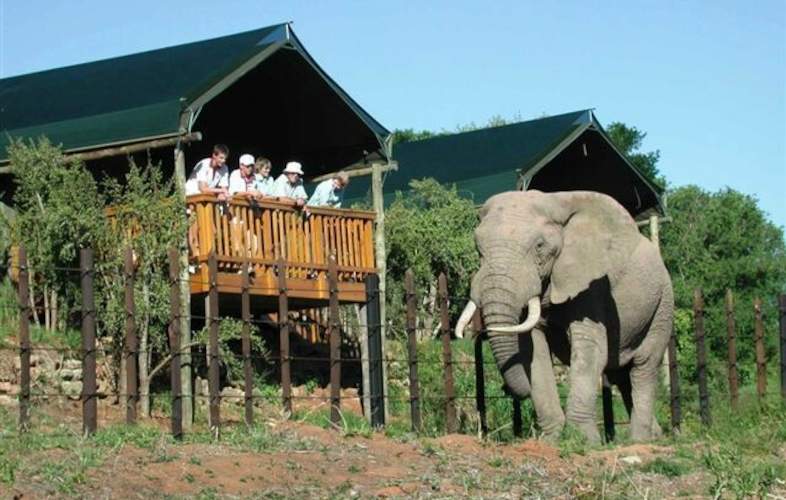
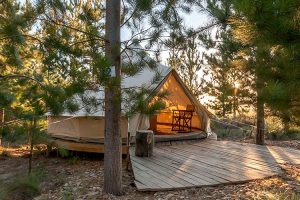
Parks accommodation includes simple self-catering units, luxury elevated units with glass frontage and decks plus tented units and caravan stands. We cover the 3 Rest Camps.
click to enlarge
Addo Rest Camp
click to enlarge
This is the main camp and centre for activities. A unique feature is the waterhole lookout point, floodlit at night, within the camp as well as the underground hide, allowing close encounters with wildlife.
Facilities include a swimming pool, air-conditioning in permanent units, a restaurant, a shop with basic supplies and curios plus a petrol station. There are no banking facilities and while credit cards are used, some activities require cash. There is good cell phone reception and patchy WiFi.
Matyholweni Rest Camp.
Additional Details
Credit Cards accepted:Visa, MasterCard
Wheelchair friendly:Yes
RRRR
Price Range
For en suite self catering chalets; R1200 - R4000 per unit per night