The peoples and history of the KwaZulu Natal’s North Coast
The ancestors of the Zulu people moved southwards and into the area over 700 years ago, with broader Bantu-speaking and Nguni roots in the area dating back to at least the 14th century.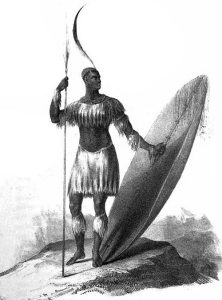
Zulu lineage was founded around 1550 by Chief Malandela, whose son, Zulu kaMalandela, gave his name to the clan. The small clan grew into a powerful centralized kingdom in the early 19th century under King Shaka, unifying by brute force, neighbouring communities across present-day KwaZulu-Natal.
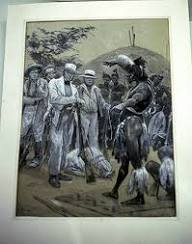 British traders established a permanent settlement at Port Natal, now Durban, in 1824 with the permission of King Shaka.
Britain annexed the short-lived Boer Republic of Natalia in 1843, proclaiming it the Colony of Natal after clashes. Natal grew to have a strong English-speaking white settler majority, deeply mirroring British social, educational, and institutional norms. It remains a predominantly English speaking, British values area in urban, sub urban and coastal areas despite KZN being the most culturally diverse area in South Africa.
Conflict with the Zulu nation was driven by imperial ambitions and a desire for confederation. British forces under Lord Chelmsford invaded Zululand. We discuss the Anglo Zulu Wars separately. After the Zulu defeat at the Battle of Ulundi in July 1879, Zululand was partitioned and eventually annexed into the colonial administration.
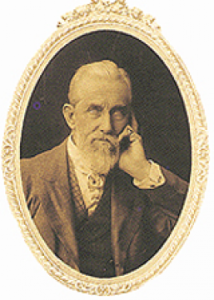 An important Briton to arrive in the colony in 1857, was James Liege Hullett from Kent. He was 19 and quickly started his farming career, initially planting tea, then due to the booming need for sugar across the world, he decided to plant sugar.cane. His first sugar mill followed. He subsequently founded the company, Tongaat Hullett Sugar in 1892 that evolved into the multi-billion rand enterprise. His Hullett Sugar industry remains prominent in South Africa, with 80% of SAs sugar growing taking place in KZN.
In the 1850s around 50 Mauritians arrived in the colony. They were experienced in the management of sugar growing and quickly slotted into the colonial system. They became important in the North Coast’s sugar farming and industry and quickly assimilated surprisingly, choosing to speak English although mostly marrying other Mauritians.
In the 1980s and 1990s more came as Mauritius was undergoing change and there was political uncertainty.
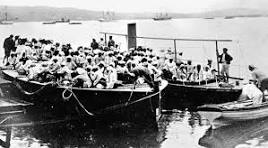
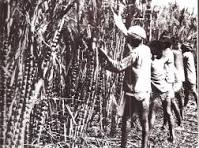 When sugar cane was first planted, there were insufficient Zulu available to fuel this labour intensive activity. Hullett introduced Indentured labourers from India in 1860 to work in the sugarcane industry. They were followed by waves of immigrants from the subcontinent, eventually forming the largest Indian community outside of India. They came from all religions and this has left a rich legacy of Indian culture including more than 40 Hindu temples. We suggest that you visit those we have listed to gain an understanding of this wonderful and very old culture. Also try a bunny chow… a half loaf of bread filled with spicy, flavoursome curry which was the typical lunch in field for the labourers.
So … a rich cultural mix in this interesting province.