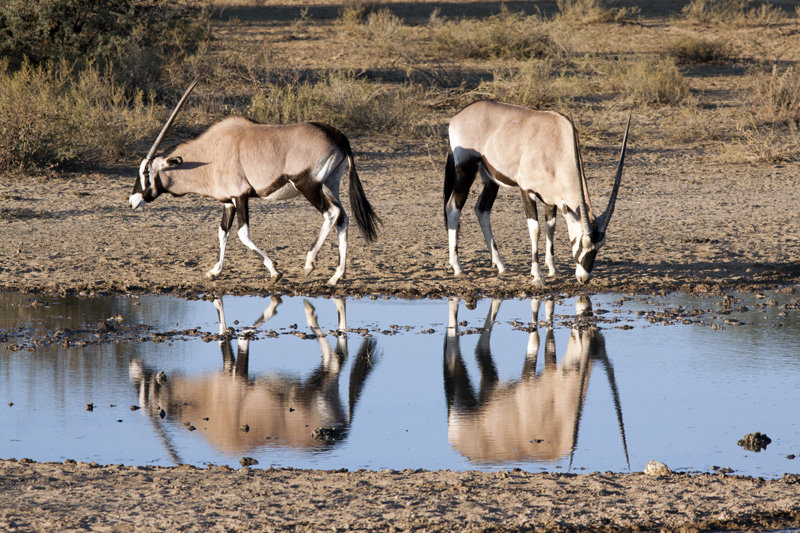
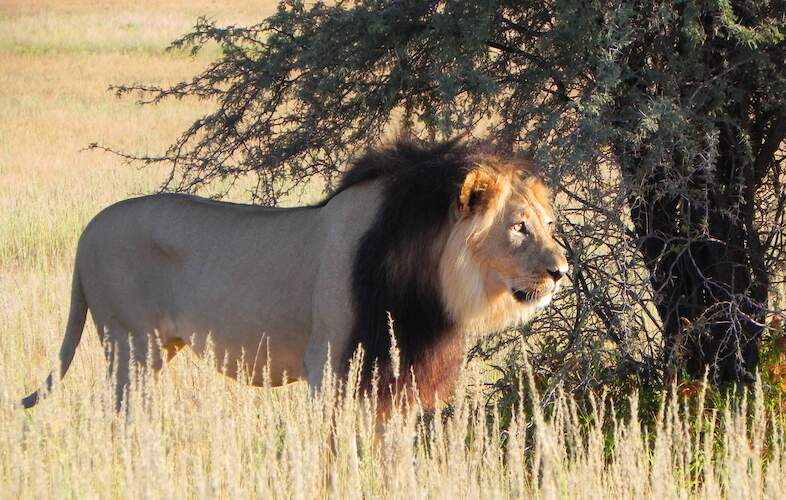
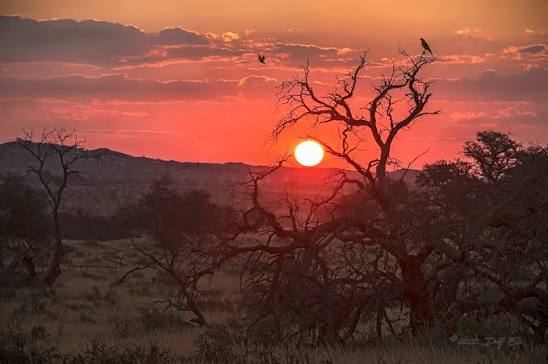
“Where the red dunes and scrub fade into infinity and herds of gemsbok, springbok, eland and blue wildebeest follow the seasons, where imposing camel thorn trees provide shade for huge black-mane lions and vantage points for leopard and many raptors… this is the Kgalagadi Transfrontier Park.” SanParks
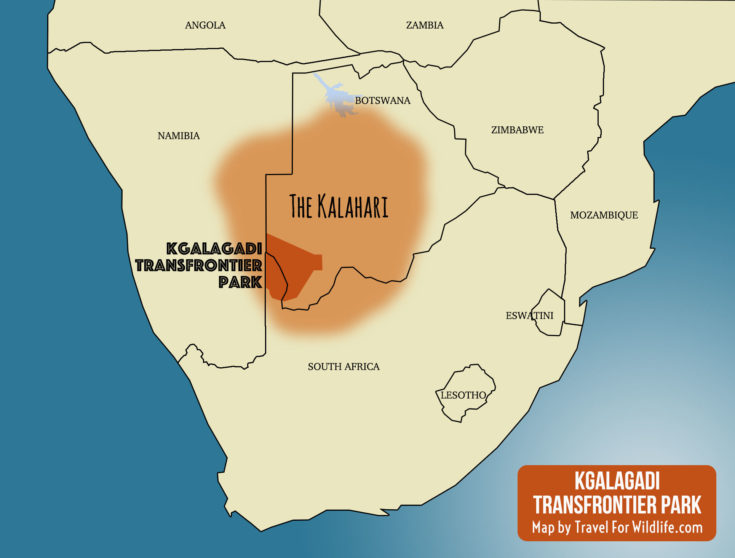
This enormous wildlife preserve in the Kalahari Desert (Place of Thirst), borders Namibia and 27% of it is in South Africa and the balance in Botswana. It is almost twice the size of the Kruger at approximately 38,000 km² (14,668 sq mi). It is an unfenced border area so both game and tourists can move freely. Visitor numbers are limited and it can feel as if you have the park to yourselves at times.
This is a vast and pristine wilderness with gravel or sand roads and speed limits. You need to plan carefully to get to your camp before gates close, (typically open from 06.00 to 19.00 hours). Plan for pit stops as you are not allowed out of the car unless it is in a designated spot due to predators. Careful that lion are not resting in the shade of the toilet buildings before you leave the car! Roads are not too bad but at the entrance, let some air out of your tyres to 1.6 bar, the 3 main rest camps have the facilities to do this.
Temperatures are around 40 degrees C in peak Summer daytime and ‘drop’ to 32 degrees C in the evening. Winter evenings can drop to -10 degrees C. Even though it is arid, you can get mosquitos, so bring mosquito spray! Even when there is air conditioning in chalets, it is not much use when power runs just during the day. Plan for a way to keep cool at night. Ice packs to freeze during the day are useful.
The Auob river flowed for the last time in 1974 and the Nossob river in 1964. Water flows underground here and ensures that vegetation is possible. Wells have been dug on the South African side to bring water to the surface and these wells attract large numbers of wild animal. On the Botswana side the pans draw the game.
The Saunter does not recommend day visits although you can do them. Just 20 cars are allowed in on day visits per day. The park is huge and you need time at each place to see what is and will be there. It is very different to a Kruger experience. The sightings are fantastic but you need patience. (more info)
Wildlife sightings are year round but spring and autumn have advantages beyond comfortable temperatures. Autumn has large migratory groups drinking in the river beds and spring, is birthing season. Summer has the migratory birds, down pours of rain and muddy roads. When pools of rainwater collect in the river bed, there is a transformation as yellow lilies come into flower and patches of green grass emerge along river banks.
It is about an 11 hour 45 min drive from Cape Town (1081kms) and Johannesburg is 10 hours 30 mins (917kms). From Durban to the park is 1446kms and it takes around 15 hours 10 mins. (more info)
If you arrive via Uppington, there are supermarkets, incl. Spar and Woolworths to stock up and camps with shops carry everything from drinking water, your priority, to firewood. It is advised that you carry 10 litres of drinking water in your vehicle at all times.
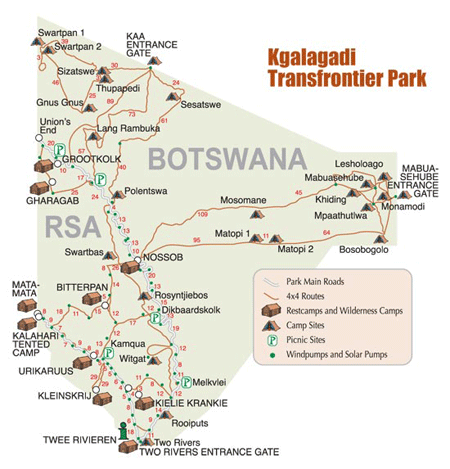
If you are in a sedan it should have a high clearance and, check that the road you plan on taking is not 4×4 only. 4x4s help in the December to April period when roads become muddy as well as being obligatory in the Botswana section of the park. The Southern section of the park is generally fine in a sedan.
Some specific areas where 4×4 is better or obligatory:
*Between Urikaruus and Mata Mata where regular traffic combined with some deep sand sections can make for difficult driving at times
*There are are also two roads on the South African side, the Bitterpan road and the Gharagab road, which are strictly 4×4 and only visitors with a booking at those camps can use them.
If you get stuck in this park, it could be for a long time. So, on the South African side, you get a daily permit, and let the staff know where you are going. You hand your permit back in at night, or else they go searching.
Polentswa and Kij Kij – All predators, but particularly lion and jackal go to these waterholes to drink and hunt.
Cubitje Quap, north of Nossob, has hundreds of birds arrive to drink throughout the day. This is cited as the best place to photograph the Bateleur Eagle. Lion, kudu and springbok frequent the hole too.
Craig Lockhart, Samevloeiing, Grootkolk and Marie se Draai are also good.
Practical suggestions from those who know. (more info)
(Booking for South African camps)
Check the link above for availability and current prices. Cabins are typically R1756 to R2931 for 2 and R 2717 per night for 4.
There are national parks board rest camps with tented, chalet or camping options. All are self catering, so carry everything you need. A limited number of people are allowed into the park at any one time. Bookings for the SanPark camps open 11 months ahead and you need to book immediately as accommodation fills rapidly.
The rest camps are rustic, comfortable and reasonable. The first 3 are traditional and fenced, plus there are 6 wilderness camps, which are unfenced. All are self catering. There is one luxury private lodge, which is a very special place, fully catered and owned by the Khoi San people.
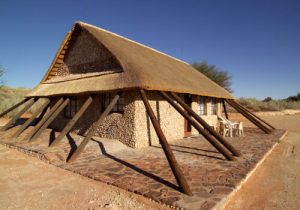
Twee Rivieren is the Park’s largest rest camp and administrative headquarters. It is situated on the banks of the Dry Nossob Riverbed. There is a shop, fuel, restaurant, information centre and swimming pool. This is the only camp with 24-hour electricity and cell phone reception. You can purchase WiFi but the signal is weak.
The Twee Rivieren Interpretation Centre showcases a history of the park and World Heritage status of the ‡Khomani Cultural Landscape. It is worth visiting. There is a waterhole hide at the camp and morning and sunset game drives are offered which need pre booking.
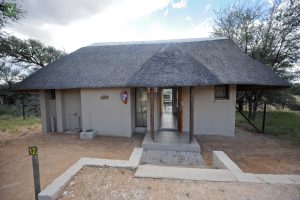 Nossob Rest Camp
Nossob Rest Camp has a Guesthouse, a range of cottages and camping sites to suit a variety of tastes and budgets. There is aircon in chalets but electricity does not run all night. River Facing chalets are very good. The camp is situated within the dry riverbed and is surrounded by tree savannah. It is famous for spectacular predator sightings.
The camp has a swimming pool, predator information centre, shop and fuel facilities. Solar power provides daytime electricity. No phone reception is available. Morning and sunset game drives are offered which need pre booking.
Nossob Rest Camp Hide
Considered the premier hide in the park, this elevated, walk-in structure provides exceptional, eye-level photo opportunities. Lions, leopards, and various raptors are frequent visitors to the waterhole. Desert birds, such as falcons hunting Namaqua doves, provide constant daytime action. The hide offers a tranquil escape from the extreme daytime heat, and it is open 24/7.
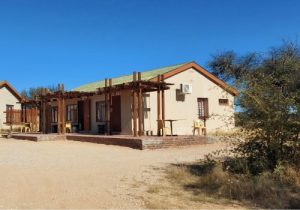
Mata-Mata Rest Camp
This popular rest camp has chalets, family chalets, and camp sites. The camp is situated on the banks of the Auob River on the western boundary of the Park, a 2.5 hour drive from Twee Rivieren. It borders Namibia and is surrounded by thorny Kalahari dune bushveld.
The camp has a swimming pool, shop and fuel facilities. Solar power provides electricity through the day. No telephone or cell phones. The Raptor Interpretation Centre showcases the Park’s many birds of prey. Morning and sunset game drives are offered which need pre booking.
Mata-Mata Rest Camp Hide
Located along the Auob Riverbed, this hide overlooks a waterhole about 100 meters away. It is a fantastic spot for seeing cheetahs, springbok, oryx, and Kalahari lions. Floodlights illuminate the waterhole until 22:00, allowing for incredible nocturnal wildlife viewing.
The Wilderness Camps book out well in advance!
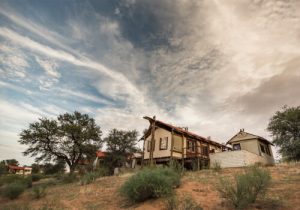 Kalahari Tented Camp
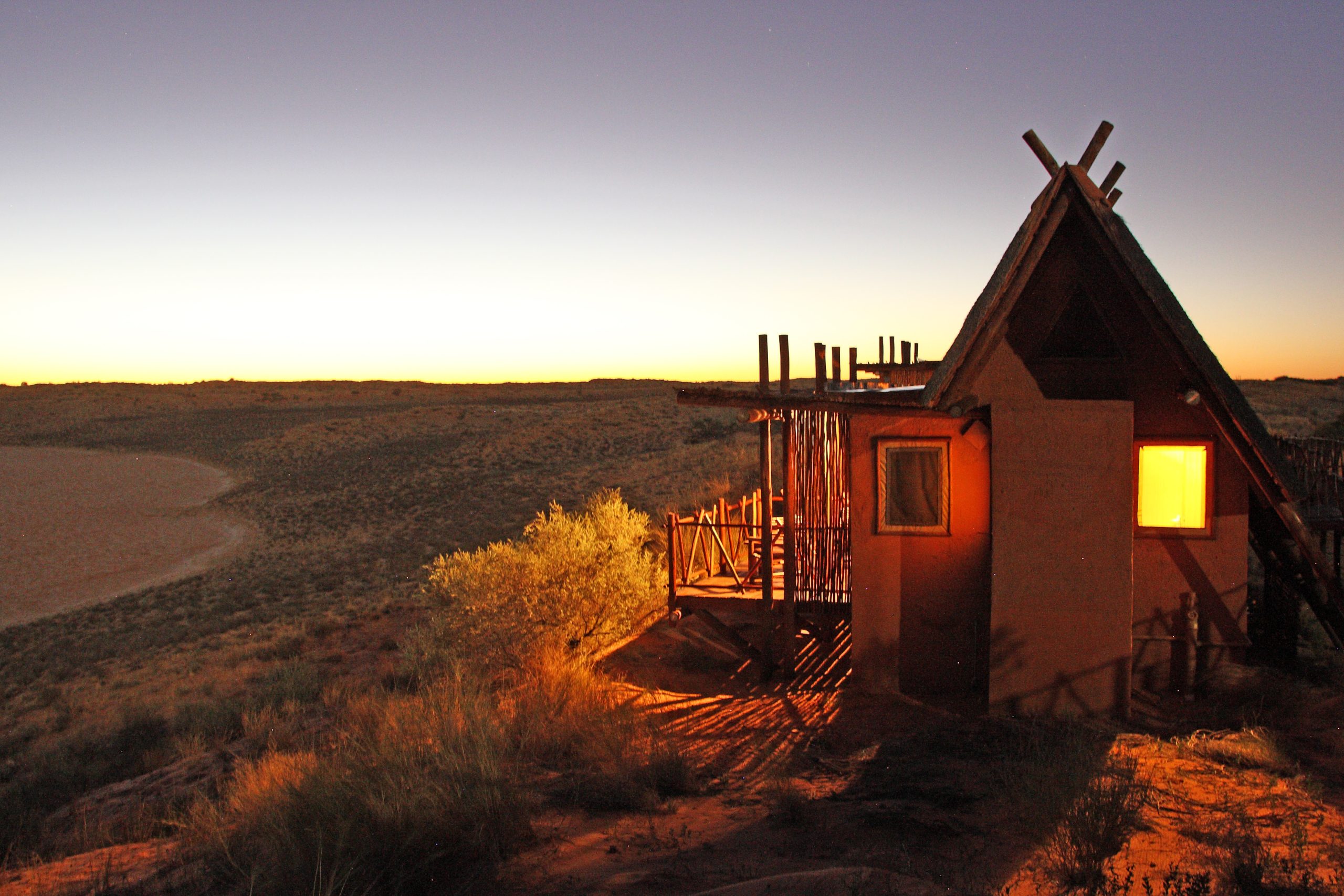
This tented camp is just 3kms from Mata-Mata Camp and is situated high up on a red sand dune, overlooking a waterhole in the dry bed of the ancient Auob River. This exclusive getaway for the discerning visitor has 15 two bed desert tents on stilts, each elegantly decorated with rustic finishes using wood, sand and canvas exteriors all in the colours of the park. Each has a ceiling fan, bathroom, kitchen and braai. There is a swimming pool, morning and sunset game drives and ranger lead walks.
Residents can refuel and get basic supplies at the small Mata-Mata shop. Here it is just you and the desert, no cell phone reception and limited solar power.
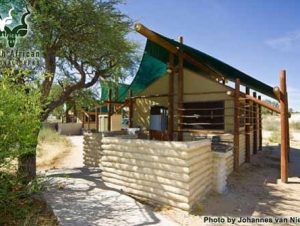
20 kilometres from Union’s End, the point where South Africa, Botswana, and Namibia converge, and is nestled among the dunes with a view of a waterhole. Tucked away amidst red sand dunes, this camp is ideal for getting away from it all or for special events. Driving times to Grootkolk are 2.5 hours from Nossob and 6 hours from Twee Rivieren. Sedan cars are possible to reach the site. Two bed chalets have a ceiling fan, bathroom and kitchen on patio, with braai.
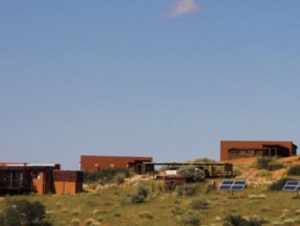 Kieliekrankie Wilderness Camp
Tucked away amid the red dunes of the Kalahari. Enter through a tunneled access route dug into the dune and leave the heat of the Kalahari day behind you. Every tented unit offers view of the Kieliekrankie Water Hole. Unwind on your personal deck while you watch antelope at the waterhole, and the colours of the Kalahari sky transform the dunes into a stunning show of reds. Two bed units have a bathroom with a shower, linen, towels and an equipped kitchen.
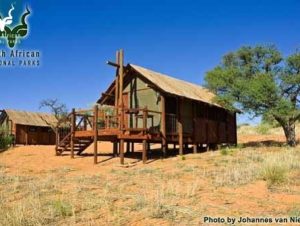
The camp is situated above the scorching sands of the Camel Thorn veld and Terminalia veld, giving it a distinctive appearance. Watch the sun set from your private balconythe comfort of the balcony, and take a shower beneath the stunning Kalahari night sky. Two bed units ensuite with a shower, linen, towels and a fully equipped kitchen.
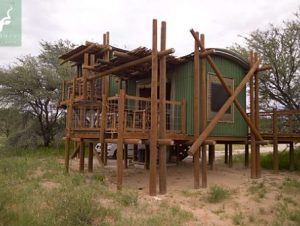 Urikaruus Wilderness Camp
Spend the night amidst the twisted Camel Thorn trees near the historic Auob River’s banks. For safety, the camp is elevated and each unit is connected to the others via a wooden boardwalk. This well situated, unfenced camp has a view of the dry riverbed waterhole that attracts a variety of wildlife. The two bed units have a bathroom with a shower, linen, towels and a fully equipped kitchen plus covered parking.
Bitterpan Wilderness Camp
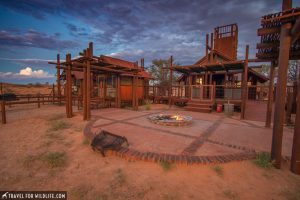 Elevated above the red sand dunes on stilts, Bitterpan is an exclusive camp overlooking a waterhole. Bitterpan is situated in the center of the wilderness opening up a new 4×4 route through the Kalahari dunes from Nossob to Mata-Mata and the Kalahari Tent Camp. It is on a ONE-WAY route starting from Nossob. It is approximately a 2,5-hour drive from Nossob to Bitterpan, while from Bitterpan to Craig Lockhart on the Auob tourist road takes another 2.5 hrs, and thereafter 15 minutes to Mata-Mata, or a two hour drive to Twee Rivieren. It is strictly a 4×4 route, but BIG 4×4’s such as Unimogs (heavy vehicle) are not allowed.
Guests should consider staying at Nossob before their departure for Bitterpan, as it is an approximately 3 hours drive from Nossob along the one-way 4×4 route. Check in to Bitterpan at Nossob. (NOT Twee Rivieren or Mata-Mata.)
You must have a minimum of two vehicles and you will be led by a park guide in their own vehicle. Along the 4-day trip you will stay at three exclusive wilderness campsites. (Bookings through Twee Rivieren)
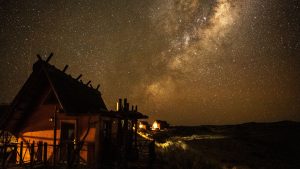
(DBB for 2 R4800 ) Privately owned by the local Khomani San and Mier communities and well managed by specialists to support the community. This is a catered luxury stay and a wonderful way to experience this territory… and the ancient ways of the San and Khoisan peoples. An authentic cultural experience. (more info)
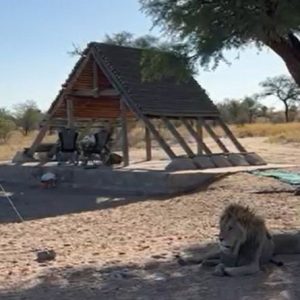
Travel on this side of the park requires a 4×4 and for you to travel in convoy. This side is for the adventurous traveler. There are no petrol stations or grocery shops so take everything including, spare fuel. There are 2 rest camps and the rest is wilderness camping only. Some areas are simply cleared space and you bring everything. Others have an A Frame shape which gives shade, plus a long drop loo and an open air bucket shower. Water in some camps is drawn from a borehole. Some have no water. Either way carry your own drinking and shower water as boreholes can dry up. Another point of note…if you get there and lion are using it for shade, you will need extreme care or another camp.
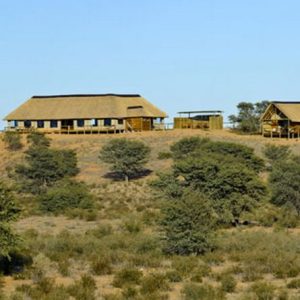 Ta Shebube Rooiputs
(1 person US$ 606, 2 sharing US$ 933)
The lodge has extensive panoramic views and lions often visit the adjacent waterhole. Lodge facilities include a lounge area, a bar, dining area, library; plunge pool, craft shop and a boma.
There are 9 en suite thatched chalets, 1 family unit and 1 luxury desert suite with an outside sunken bath. Each chalet is built on a wooden deck and has stunning views. Chalets have a double or twin beds, a sitting area, en suite bathroom, outside shower and a large veranda.
Ta Shebube Polentswa
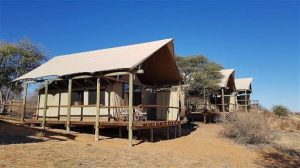 (1 person US$ 606, @ sharing US$ 933)
Polentswa is a classic tented camp capturing a bygone era, located along the predator rich Nossob Valley. All tents are set on raised wooden platforms under large canvas roofs that cover a private veranda.
6 luxury classic safari tents; 1 family unit; 1 desert/honeymoon tent with outside sunken bath. Each tent has double/twin beds with en-suite bathroom, a sitting area, an outside shower.
The main building overlooks a waterhole. There is a lounge, bar, dining room, library, craft shop, boma and a plunge pool.
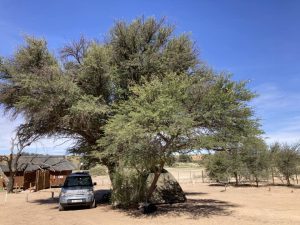
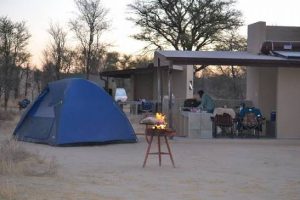
Mata Mata camping & communal ablutions Nossob Camping – private ablution & kitchen.
This is incredible value and on the SA side, the camping sites are in fenced Twee Rivieren, Nassob and Mata Mata Rest Camps. There are standard and more expensive, premium sites which offer private ablutions and kitchenettes.
Some sites have power outlets and electricity. There is no WiFi. All the ablutions have hot showers and flushing toilets. Cost per site per night R509.
If you are going to camp on the Botswana side, the camps are all unfenced and predators do pass through. Think about that when choosing your tent or camper van! Loos are long drop and outdoor bucket showers are cold as these are very rustic camps. You may need your own water for the shower at some camps.
Mabuasehube Pan Campsite
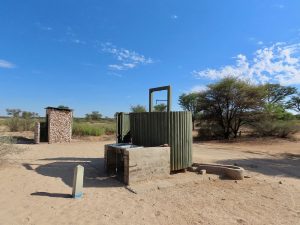
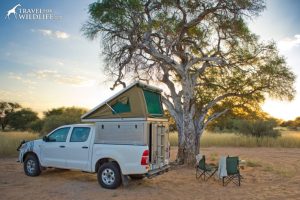
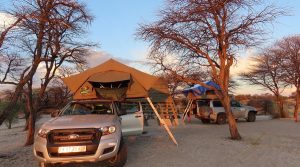
US$ 105. Situated in Botswana’s Mabuasehube region, this is a remote, rustic spot whose name translates to “red earth,” a nod to the red sands of the Kalahari.
Each of the four campsites overlooks the pans in this typically arid area. During the rainy season, the pans collect water, and their hardened surfaces help retain it, preventing immediate evaporation and offering essential nutrients to passing wildlife.
Mpayathutlwa Pan Campsite
US$ 105.
Just 3 campsites here, giving a secluded and rustic experience in the wild. Lions are often spotted nearby. You can explore with minimal encounters with other travellers. you can explore the expansive landscape with minimal encounters with other travellers, creating a sense of solitude in nature.